What Is DHT Hair Loss? Causes, Signs, And What Actually Helps
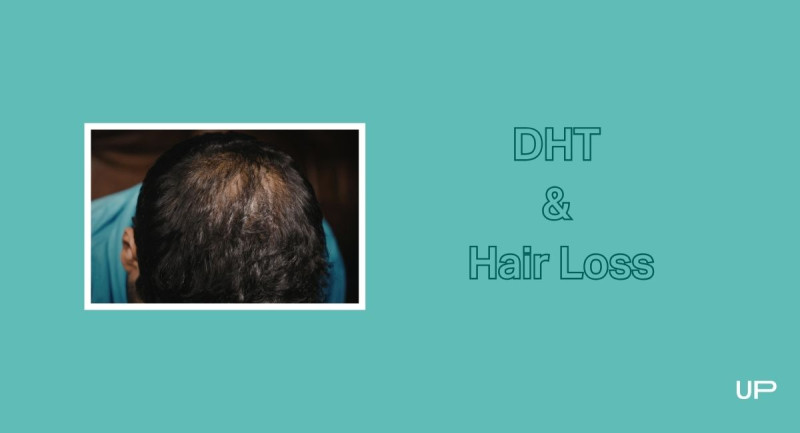

DHT (dihydrotestosterone) is the main hormone responsible for male pattern hair loss. It gradually shrinks hair follicles, leading to thinner hair and, over time, permanent loss.

While this process is common and often genetic, it can be managed—especially when addressed early. For those exploring options beyond lifestyle changes, approaches like hair loss treatment in Canada are designed to target the underlying cause rather than just the symptoms.
Topics covered in this article:
- What Is DHT and Why Does It Cause Hair Loss?
- How Does DHT Affect Hair Follicles?
- What Are the Signs of DHT Hair Loss?
- Is DHT Hair Loss Reversible?
- Can You Block DHT Naturally?
- Natural vs Targeted Approaches: What’s the Difference?
- Who Is Most at Risk for DHT Hair Loss?
- When Should You Take Action?
- Frequently Asked Questions About DHT and Hair Loss
- Key Takeaways
- References
What Is DHT and Why Does It Cause Hair Loss?
DHT is a hormone derived from testosterone that plays a key role in male development—but it is also the primary driver of male pattern hair loss.

In men who are genetically sensitive, DHT binds to hair follicles and causes them to shrink over time. This process, known as follicle miniaturization, makes it harder for hair to grow back at its normal thickness and length.
Not all hair follicles are affected equally. Areas like the hairline and crown are typically more sensitive to DHT, which is why hair loss often follows a predictable pattern.
Key takeaway: DHT itself isn’t harmful, but sensitivity to it can gradually weaken hair follicles and lead to long-term hair loss.
How Does DHT Affect Hair Follicles?
DHT affects hair by disrupting the natural growth cycle and shrinking the follicles that produce each strand.
Over time, this leads to:
- Shorter growth phase (anagen): Hair doesn’t grow as long or as thick
- Longer resting phase (telogen): More hairs shed without being replaced quickly
- Thinner strands: Each cycle produces finer, weaker hair
As this cycle repeats, follicles may eventually stop producing visible hair altogether.
Key takeaway: DHT doesn’t cause sudden hair loss—it gradually weakens follicles until hair becomes thinner and stops growing.
What Are the Signs of DHT Hair Loss?
DHT hair loss typically follows a gradual and predictable pattern, rather than sudden shedding.
- Receding hairline: One of the earliest signs is thinning at the temples, creating an “M-shaped” hairline over time.
- Crown thinning: Hair loss at the top (vertex) of the scalp, often starting as a small thinning spot that expands gradually.
- Gradual progression: Unlike temporary shedding, DHT-related hair loss develops slowly over months or years, becoming more noticeable over time.
These patterns are characteristic of genetic hair loss and tend to follow similar progression seen in family members.
Key takeaway: DHT hair loss is usually slow, patterned, and progressive—making early recognition important for better outcomes.
Is DHT Hair Loss Reversible?
Not fully, but it can be slowed or managed.
Once hair follicles have significantly miniaturized, they often cannot return to their original state. However, in earlier stages, it may be possible to preserve existing hair and improve thickness with the right approach.
Results largely depend on the stage of hair loss:
- Early stage: Higher chance of maintaining and strengthening existing hair
- Moderate stage: Slowing progression is the main goal
- Advanced stage: Regrowth is limited, and focus shifts to stabilization
Key takeaway: The earlier you address DHT-related hair loss, the better the chances of slowing progression and maintaining density.
Can You Block DHT Naturally?
Not effectively.
Some natural options are often discussed, but their impact on DHT is limited and inconsistent.
- Saw palmetto: May have mild DHT-blocking effects, but evidence is mixed and generally weaker compared to targeted approaches
- Diet and lifestyle: Good nutrition supports overall hair health, but it does not significantly reduce DHT levels
- Herbal supplements: Often marketed for hair loss, but most lack strong clinical evidence
While these approaches may support general hair and scalp health, they do not reliably address the underlying hormonal mechanism.
Key takeaway: Natural methods may offer supportive benefits, but they are unlikely to meaningfully block DHT or stop genetic hair loss on their own.
Natural vs Targeted Approaches: What’s the Difference?
Natural and targeted approaches differ mainly in how directly they address the root cause of DHT-related hair loss.
Approach | Works on DHT | Evidence Strength | Speed | Best For |
Natural approaches | ❌ | Low–moderate | Slow | Early / supportive |
Targeted approaches | ✅ | High | Moderate | Genetic hair loss |
Natural approaches tend to support scalp health and improve hair quality, but they do not directly reduce DHT activity. Targeted approaches are designed to address the hormonal mechanism behind hair loss, making them more effective for slowing progression.
Key takeaway: Natural methods can complement your routine, but targeted approaches are typically needed to manage DHT-related hair loss effectively.
Who Is Most at Risk for DHT Hair Loss?
Men with certain genetic and hormonal traits are more likely to experience DHT-related hair loss.
- Genetics: The strongest predictor. If close family members have male pattern hair loss, the likelihood is significantly higher
- Age: Risk increases over time, with many men noticing changes in their 20s, 30s, or later
- Hormonal sensitivity: Some individuals have hair follicles that are more sensitive to DHT, even if hormone levels are normal
Not everyone with DHT will experience hair loss—what matters most is how sensitive the follicles are to it.
Key takeaway: Genetics and follicle sensitivity play a bigger role than hormone levels alone in determining risk.
When Should You Take Action?
You should consider taking action as soon as you notice early signs of hair loss.
Early indicators like a receding hairline or thinning at the crown often signal the beginning of DHT-related changes. Acting at this stage provides the best opportunity to slow progression and maintain existing hair.
Waiting until hair loss becomes more advanced can limit the effectiveness of any approach, as follicles may already be significantly weakened.
Key takeaway: The earlier you respond to signs of hair loss, the better your chances of preserving hair density over time.
Frequently Asked Questions About DHT and Hair Loss
DHT hair loss is a form of genetic hair loss where the hormone DHT causes hair follicles to shrink over time.
This process leads to thinner, shorter hair growth cycles and eventually reduced or stopped hair production in affected areas like the hairline and crown.
Not effectively.
Some natural options like certain supplements or lifestyle changes may have minor effects, but they do not reliably reduce DHT levels enough to stop hair loss.
It varies, but typically progresses gradually over months to years.
Some men notice slow thinning over a long period, while others may experience more noticeable changes within a shorter timeframe depending on genetics and sensitivity.
No.
DHT is a normal hormone in all men, but only those with genetically sensitive hair follicles experience hair loss.
No, DHT is not inherently bad.
It plays an important role in male development and overall health. Hair loss occurs due to sensitivity to DHT, not because the hormone itself is harmful.
Key Takeaways
- DHT is the primary hormone responsible for male pattern hair loss
- Hair loss occurs due to follicle sensitivity to DHT, not the hormone itself
- The process is gradual and progressive, often starting at the hairline or crown
- Natural methods have limited impact on DHT, especially in genetic cases
- Early action matters—intervening sooner can help slow progression and preserve hair
If you're looking for clinically grounded options, it may be worth exploring approaches that specifically target the underlying causes of hair loss.
While general hair care and lifestyle habits can support overall scalp health, DHT-related hair loss often requires a more targeted approach. Speaking with a licensed healthcare provider can help you better understand your options and choose a path that aligns with your goals.
References
UPGUYS has strict sourcing guidelines to ensure our content is accurate and current. We rely on peer-reviewed studies, academic research institutions, and medical associations. We strive to use primary sources and refrain from using tertiary references.- Hair loss: Diagnosis and treatment, AAD,
https://www.aad.org/public/diseases/hair-loss/treatment/diagnosis-treat - In brief: What is the structure of hair and how does it grow?, NIH,
https://www.ncbi.nlm.nih.gov/books/NBK546248/ - Comparative effectiveness of finasteride vs Serenoa repens in male androgenetic alopecia: a two-year study, PubMed,
https://pubmed.ncbi.nlm.nih.gov/23298508/
This article is written for informational purposes only and does not constitute medical advice. The information provided in the articles cannot and should not replace advice from a healthcare professional. Talk to your healthcare provider about any physical or mental health concerns or the risks and benefits of any treatment or medication.




UPRX Pharmacy (West) Licenced by:
College of Pharmacists of British Columbia
Licence Number: 38287
1221543 B.C. LTD
224 – 3989 Henning Dr.
Burnaby BC, V5C 6P8 Canada
P: 604-291-1094 F: 604-291-0827
Pharmacy Manager: Mehrdad Rezaei
UPRX Pharmacy (East)
Accredited by:
Ontario College of Pharmacists
Accreditation Number: 309322
1000286128 Ontario Inc.
105 - 91 Skyway Ave
Etobicoke, ON M9W 6R5 Canada
P: 416-679-1774 F: 416-679-1808
Designated Manager: Todd Spetter