Treatments
Learn
Language
KYZATREX In Canada: What To Know About Oral Testosterone
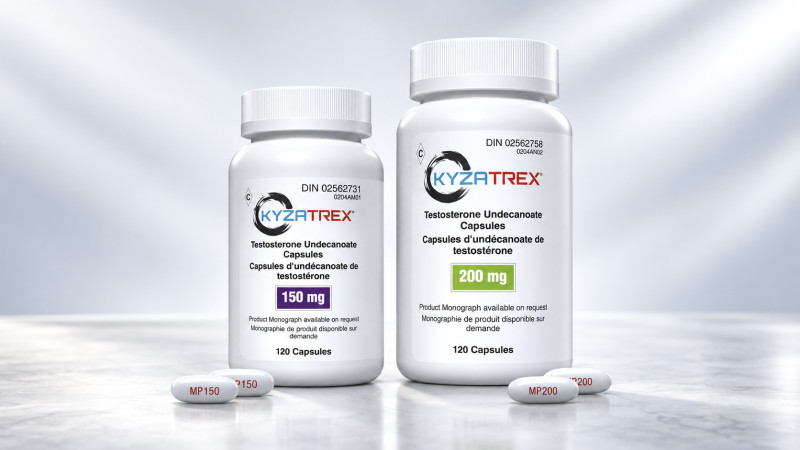

Testosterone replacement therapy (TRT) is available in several forms, including injections, topical treatments and oral testosterone. KYZATREX is an oral testosterone undecanoate capsule that provides another prescription option for men with appropriately diagnosed testosterone deficiency.
KYZATREX launched in Canada in September 2026, adding a newer oral testosterone option to the Canadian TRT landscape.
KYZATREX is approved in Canada and is available through UPGUYS for eligible patients. It is intended for men with low or absent testosterone related to certain medical conditions, not simply for age-related symptoms or as an over-the-counter testosterone booster.
For men considering testosterone replacement therapy (TRT) in Canada, the important point is that KYZATREX is not just a generic continuation of older oral testosterone capsules. It is a newer oral testosterone undecanoate formulation with its own delivery system, dosing approach and monitoring requirements. Treatment still requires practitioner assessment, confirmation of testosterone deficiency and ongoing monitoring.
Topics covered in this article:
- What Is KYZATREX?
- How Does KYZATREX Work?
- How Is KYZATREX Different From Older Oral Testosterone?
- Is KYZATREX Available in Canada?
- Who May Be Considered for KYZATREX?
- How Is Low Testosterone Confirmed Before KYZATREX?
- How Is KYZATREX Taken?
- Does KYZATREX Need to Be Taken With a Fatty Meal?
- How Is KYZATREX Different From Testosterone Injections?
- How Is KYZATREX Different From Testosterone Gel?
- KYZATREX vs Injections vs Gel
- Does KYZATREX Work Like Other Forms of TRT?
- Can KYZATREX Affect Fertility?
- What Are the Possible Side Effects of KYZATREX?
- Does KYZATREX Affect the Liver?
- Can KYZATREX Raise Blood Pressure?
- Can KYZATREX Interact With Other Medications?
- What Should Be Monitored While Taking KYZATREX?
- How Soon Are Testosterone Levels Checked After Starting KYZATREX?
- Is KYZATREX Better Than Testosterone Injections or Gel?
- Who May Not Be a Good Candidate for KYZATREX?
- How Can Men in Canada Access KYZATREX?
- Key Takeaways
- FAQ
- References
What Is KYZATREX?
KYZATREX is a prescription oral testosterone undecanoate capsule used to replace testosterone in appropriately diagnosed men with testosterone deficiency.
Its active ingredient is testosterone undecanoate, a form of testosterone designed for oral administration.
KYZATREX is approved by Health Canada in three strengths: 100 mg, 150 mg and 200 mg. However, it is currently supplied in Canada as 150 mg and 200 mg capsules.
It is classified in Canada as a controlled drug and requires a prescription.
KYZATREX is not an over-the-counter testosterone supplement or “testosterone booster.” It is a prescription testosterone replacement treatment that is used when a healthcare practitioner determines that testosterone deficiency has been appropriately diagnosed.
It is also important not to confuse KYZATREX with older oral testosterone products. While both may contain testosterone undecanoate, KYZATREX is a distinct formulation with its own absorption characteristics, dosing and prescribing information, so older oral testosterone capsules should not be assumed to work the same way.
How Does KYZATREX Work?
KYZATREX is an oral testosterone undecanoate formulation that is absorbed through the intestinal lymphatic system and used to replace testosterone in men with appropriately diagnosed testosterone deficiency.
After the capsule is taken with food, testosterone undecanoate is absorbed through the gut and enters the lymphatic system. This route is designed to reduce the amount of drug exposed to first-pass liver metabolism before reaching the bloodstream. KYZATREX uses a self-emulsifying drug delivery system designed to support intestinal lymphatic absorption of testosterone undecanoate.
KYZATREX does not stimulate the body to produce more of its own testosterone. Instead, it provides external testosterone, similar to other forms of TRT.
That means treatment can also suppress the body's natural LH and FSH signalling over time, which is why fertility and baseline hormone testing may matter before treatment begins.
Blood testosterone levels still need to be monitored because the dose is adjusted according to the patient's testosterone response. The prescribing information also specifies ongoing testosterone monitoring after treatment is started or adjusted.
How Is KYZATREX Different From Older Oral Testosterone?
KYZATREX is a newer oral testosterone undecanoate formulation designed to provide more consistent absorption and a more practical dosing and monitoring approach than older oral testosterone undecanoate capsules.
Older oral testosterone undecanoate capsules were typically available in lower strengths and could have more variable absorption depending on food and meal composition. They could also require multiple doses throughout the day to maintain testosterone levels.
KYZATREX uses a self-emulsifying drug delivery system (SEDDS) designed to support intestinal lymphatic absorption when taken with food. In Canada, it is currently supplied in 150 mg and 200 mg capsules and is generally dosed twice daily, with the dose adjusted according to measured testosterone levels.
This allows practitioners to monitor testosterone after treatment begins and adjust the dose according to the patient's response.
The important distinction is that older oral testosterone and KYZATREX should not be treated as the same formulation simply because both contain testosterone undecanoate. Their delivery systems, available strengths, dosing schedules and absorption characteristics differ.
Is KYZATREX Available in Canada?
Yes. KYZATREX has been approved by Health Canada as an oral testosterone undecanoate capsule.
KYZATREX launched in Canada in September 2026 and is currently supplied in 150 mg and 200 mg capsule strengths.
Health Canada currently lists KYZATREX in three oral capsule strengths:
Health Canada has approved KYZATREX in three oral capsule strengths: 100 mg, 150 mg and 200 mg. However, it is currently supplied in Canada as 150 mg and 200 mg capsules.
KYZATREX is a controlled drug and requires a prescription.
KYZATREX is also available through UPGUYS for eligible patients.
However, availability does not mean every man with low-testosterone symptoms is automatically a candidate. Treatment still requires practitioner assessment, confirmation of testosterone deficiency and consideration of medical history, fertility goals, risks and monitoring needs.
KYZATREX therefore adds another oral option to the testosterone replacement therapy landscape in Canada, alongside injectable and topical forms, while remaining a prescription treatment that needs individualized medical supervision.
Who May Be Considered for KYZATREX?
KYZATREX may be considered for adult men with confirmed testosterone deficiency caused by medical conditions associated with low or absent endogenous testosterone. Symptoms alone are not enough to establish eligibility.
Eligibility is not based on symptoms alone. A healthcare practitioner should assess the full clinical picture, including:
- Symptoms consistent with testosterone deficiency
- Confirmed low testosterone on blood testing
- The likely underlying cause
- Medical history
- Current medications
- Fertility goals
- Contraindications and treatment risks
- Whether oral TRT is appropriate for the individual
The Canadian product monograph states that KYZATREX is used to treat adult men who have low or no testosterone due to male hypogonadism, with the diagnosis confirmed through blood testing.
Men who are trying to conceive or preserve fertility should discuss this before starting treatment because external testosterone can suppress LH, FSH and sperm production.
The Canadian product monograph states that no data are available to Health Canada and that Health Canada has not authorized an indication for geriatric use.
How Is Low Testosterone Confirmed Before KYZATREX?
Low testosterone should be confirmed with symptoms plus consistently low testosterone levels, rather than one isolated result.
The Canadian product monograph specifically states that hypogonadism should be confirmed before KYZATREX is started by measuring morning serum testosterone on at least two separate days, with both results below the normal range.
Depending on the clinical picture, your practitioner may order additional hormone or endocrine tests to better understand the cause of low testosterone before treatment is started.
These tests can help determine why testosterone is low, which may influence whether TRT is appropriate and what form of treatment makes sense.
How Is KYZATREX Taken?
KYZATREX is an oral capsule taken with food, with the dose individualized according to testosterone levels and treatment response.
The current Canadian product monograph recommends a starting dose of 200 mg twice daily, once in the morning and once in the evening, taken with food. The dose can then be adjusted according to serum testosterone results.
Depending on the response, the prescribed dose may range from 100 mg once daily to 400 mg twice daily. For total daily doses above 100 mg, the Canadian monograph recommends giving the same dose in the morning and evening. Because the 100 mg capsule is not currently supplied in Canada, the practical dose range here is 150 mg once daily to 400 mg twice daily.
To support adequate absorption, the capsules should be taken with a meal and swallowed without chewing.
Testosterone levels are checked after treatment begins or the dose changes so that the practitioner can determine whether an adjustment is needed. The Canadian monograph specifies checking serum testosterone seven days after starting treatment or changing the dose, 3 to 5 hours after the morning dose.
Patients should not increase, decrease or otherwise change their KYZATREX dose on their own. Dosing should remain practitioner-directed based on testosterone levels, treatment response and safety monitoring.
Does KYZATREX Need to Be Taken With a Fatty Meal?
KYZATREX must be taken with food, but the Canadian product monograph does not require a specific “high-fat meal.”
Meal fat content can influence absorption, with higher-fat meals producing greater testosterone exposure than fasting. However, KYZATREX was studied under fed conditions using different meal types, so the safest instruction is to take it consistently with food as prescribed rather than trying to target a specific amount of dietary fat.
KYZATREX uses a self-emulsifying formulation designed to support intestinal lymphatic absorption. This is one reason it should be treated as a distinct oral testosterone formulation with its own food, dosing and monitoring instructions.
The practical takeaway is:
- Take KYZATREX with food
- Follow the prescribed dosing routine consistently
- Meal composition can affect absorption
- Do not assume it has the same food requirements as other oral testosterone products
The important point is that KYZATREX should be taken according to its own prescribing instructions. Men should not try to change meal fat content or alter how they take the medication in an attempt to influence absorption without guidance from their healthcare practitioner.
How Is KYZATREX Different From Testosterone Injections?
The main difference is the route of administration: KYZATREX is taken orally, while injectable testosterone is administered by injection.
KYZATREX may appeal to men who prefer to avoid needles, but the two approaches also differ in dosing schedules, absorption and how testosterone levels change after each dose.
Route | Oral capsule | Injection |
Needles | No | Yes |
Dosing | Regular oral dosing | Depends on injection regimen |
Absorption | Intestinal/lymphatic | Direct systemic delivery |
Testosterone monitoring | Required | Required |
Dose adjustments | Based on response and labs | Based on response and labs |
Neither approach is universally better.
The choice depends on factors such as treatment preference, medical history, ability or willingness to use injections, testosterone response and practitioner assessment.
Both are forms of testosterone replacement, so both can affect the body's natural LH and FSH signalling and may affect fertility.
How Is KYZATREX Different From Testosterone Gel?
KYZATREX is swallowed as a capsule, while testosterone gel is applied to the skin and absorbed through it.
One practical difference is that KYZATREX does not require daily skin application. It also does not carry the same concern about testosterone transferring from treated skin to another person through direct contact, which can be relevant with some topical testosterone products.
Other differences include:
- Oral versus skin absorption
- Different dosing routines
- Different pharmacokinetic profiles
- Different application requirements
- Different practical considerations for everyday use
Both approaches still require appropriate diagnosis and ongoing testosterone monitoring.
Some men may prefer an oral capsule because they want to avoid injections or topical application, while others may prefer a gel or another TRT form. The best route depends on individual preference, treatment response, medical suitability and practitioner guidance.
KYZATREX vs Injections vs Gel
KYZATREX, testosterone injections and topical testosterone all provide testosterone replacement, but they differ in how the medication is delivered and used.
Route | Oral | Injection | Skin |
Needles | No | Yes | No |
Application | Capsule | Periodic injection | Daily topical application |
Topical transfer risk | No | No | Possible with some topical products |
Testosterone monitoring | Yes | Yes | Yes |
Prescription required | Yes | Yes | Yes |
KYZATREX may appeal to men who prefer an oral option, while injections or gels may suit others better depending on treatment preferences, medical history and response.
No single form of TRT is universally best. The choice should be based on individual suitability and practitioner guidance.
Does KYZATREX Work Like Other Forms of TRT?
Yes, in the sense that KYZATREX replaces testosterone, but its route of administration and absorption are different.
Like injections and topical testosterone, the goal is to bring testosterone into an appropriate range and improve symptoms in men with confirmed testosterone deficiency.
KYZATREX does not restart the body's natural testosterone production. It supplies external testosterone.
Because the body detects this external testosterone, natural signalling through LH and FSH may decrease. This is part of the normal negative-feedback response to testosterone therapy.
That means KYZATREX shares an important feature with other forms of TRT: it can suppress the body's own testosterone production and may also affect sperm production.
The main differences between KYZATREX and other TRT forms involve how testosterone is delivered, absorbed and dosed, not the overall goal of treatment.
Can KYZATREX Affect Fertility?
Yes. KYZATREX can affect fertility because it provides external testosterone, which can suppress LH and FSH signalling.
LH and FSH are important for normal testicular function and sperm production. When external testosterone reduces these signals, sperm production may decrease.
For this reason, men should discuss their current and future fertility goals before starting KYZATREX.
This is especially important for men who:
- Are actively trying to conceive
- Want to preserve future fertility
- Already have concerns about sperm production
- Have previously been evaluated for infertility
KYZATREX is not a fertility treatment. Men who want to maintain fertility may need a different treatment strategy, depending on the cause of their low testosterone and their reproductive goals.
What Are the Possible Side Effects of KYZATREX?
KYZATREX can cause side effects similar to other forms of testosterone therapy, so treatment requires ongoing monitoring.
Possible side effects and safety considerations include:
- Increased hematocrit or hemoglobin
- Increased blood pressure
- Acne or oily skin
- Fluid retention or swelling
- Changes in lipid levels, including reductions in HDL cholesterol
- Worsening urinary symptoms in men with an enlarged prostate
- Possible effects on sperm production and fertility
- Other testosterone-related effects
In clinical trials, KYZATREX was associated with reductions in total cholesterol, LDL cholesterol, HDL cholesterol and triglycerides. Because changes in lipids, particularly HDL, may be clinically relevant, the Canadian product monograph recommends periodic lipid monitoring.
The Canadian product monograph recommends periodic monitoring of hemoglobin and hematocrit to detect polycythemia, along with regular testosterone testing and other appropriate laboratory monitoring.
Prostate health may also need to be considered before and during treatment, depending on age, symptoms and individual risk factors.
Testosterone therapy may also worsen sleep apnea, particularly in men with risk factors such as obesity or chronic lung disease. Blood clots, including deep vein thrombosis and pulmonary embolism, have also been reported with testosterone therapy. Men with a history of blood clots or other risk factors for venous thromboembolism should discuss this with their healthcare practitioner before starting treatment.
Not every man experiences the same side effects, and the presence of one risk factor does not automatically mean KYZATREX is unsuitable. Treatment should be individualized and monitored by a healthcare practitioner.
Does KYZATREX Affect the Liver?
KYZATREX uses testosterone undecanoate and lymphatic absorption, which differs from older 17-alpha-alkylated oral androgens that have been associated with liver toxicity.
Because testosterone undecanoate is absorbed through the intestinal lymphatic system, much of the initial absorption avoids conventional first-pass liver metabolism.
However, this does not mean KYZATREX bypasses the liver completely or that liver-related monitoring is unnecessary.
The Canadian product monograph recommends liver function testing as part of routine monitoring for men receiving testosterone therapy.
The prescribing information also notes that KYZATREX is not a 17-alpha-alkyl androgen, a distinction that matters when comparing it with some older oral androgen formulations associated with hepatic adverse effects.
Men with a history of liver problems should discuss this with their healthcare practitioner before starting treatment. Symptoms that could suggest liver dysfunction should also be medically assessed rather than assumed to be unrelated because KYZATREX is absorbed lymphatically.
Can KYZATREX Raise Blood Pressure?
Yes. KYZATREX can increase blood pressure in some men, which is why blood pressure should be assessed and monitored during treatment.
Clinical data reported in the prescribing information show modest average increases in blood pressure during treatment, with somewhat larger increases observed in men who already had hypertension and were taking blood-pressure medication.
This does not mean every man taking KYZATREX will develop hypertension. Individual response varies, and overall cardiovascular health should be considered when deciding whether treatment is appropriate.
Men with high blood pressure, cardiovascular risk factors or existing heart conditions should make sure their healthcare practitioner is aware of these before starting treatment.
Ongoing monitoring helps determine whether blood pressure remains acceptable and whether any change in the treatment plan is needed.
Can KYZATREX Interact With Other Medications?
Yes. KYZATREX can interact with some medications, so a full medication review is important before treatment begins.
Potential interactions may involve medication classes used for:
- Blood thinning
- Diabetes management
- Blood pressure control
- Inflammation or immune-related conditions
- Other treatments that can affect fluid balance or cardiovascular risk
These interactions can affect factors such as blood sugar, blood pressure, fluid retention or bleeding risk.
Men should not stop or change prescribed medications on their own. A healthcare practitioner should review current medications before KYZATREX is started and determine whether any additional monitoring or treatment adjustments are needed.
What Should Be Monitored While Taking KYZATREX?
KYZATREX requires ongoing monitoring to confirm that testosterone levels are appropriate and to watch for treatment-related effects.
Monitoring may include:
- Serum testosterone levels
- Changes in symptoms and treatment response
- Hemoglobin and hematocrit to watch for polycythemia
- Blood pressure
- PSA and prostate health when appropriate
- Cardiovascular health and risk factors
- Lipid levels, including HDL cholesterol
- Liver function tests
- Other laboratory tests based on medical history and individual risk factors
The Canadian product monograph recommends periodic lipid monitoring, along with testosterone, hemoglobin, hematocrit and other appropriate safety monitoring. In clinical trials, KYZATREX was associated with reductions in total cholesterol, LDL cholesterol, HDL cholesterol and triglycerides.
How Soon Are Testosterone Levels Checked After Starting KYZATREX?
The Canadian product monograph recommends checking serum testosterone at least seven days after starting KYZATREX or after a dose adjustment.
The timing of the blood draw also matters. Testosterone should be measured 3 to 5 hours after the morning dose, with the patient in a non-fasted state.
The result helps the practitioner determine whether the dose should be maintained or adjusted.
Testosterone levels are then monitored periodically during ongoing treatment.
This timing is particularly important with an oral formulation because testosterone levels change after each dose. A blood test taken at a different point in the dosing cycle may not provide the same information used to guide KYZATREX dose adjustments.
Patients should therefore follow the specific blood-test timing provided by their practitioner rather than arranging testosterone testing at an arbitrary time of day.
Is KYZATREX Better Than Testosterone Injections or Gel?
No TRT form is universally better. KYZATREX, injections and topical testosterone each have different advantages and practical considerations.
KYZATREX may be attractive to men who prefer an oral option and want to avoid needles or daily topical application. Injections may suit men who prefer less frequent administration, while gels may work well for men comfortable with daily skin application.
The choice can depend on:
- Personal preference
- Willingness or ability to use injections
- Skin or topical-transfer considerations
- Preferred dosing routine
- Testosterone response
- Cost and access
- Medical history and treatment risks
- Practitioner recommendation
All three approaches provide external testosterone and require appropriate diagnosis and monitoring.
The best option is therefore the one that is medically appropriate, practical for the individual and capable of maintaining testosterone within the intended range, rather than one form being universally superior to the others.
Who May Not Be a Good Candidate for KYZATREX?
KYZATREX is not appropriate for every man with symptoms that could suggest low testosterone.
A man may not be a good candidate if testosterone deficiency has not been confirmed with appropriate symptoms and repeat morning blood testing. Other possible causes of the symptoms should also be considered before treatment begins.
KYZATREX is contraindicated in men with known or suspected prostate or breast cancer. It should also not be used in anyone with hypersensitivity to the medication or its ingredients.
Other factors that may require additional evaluation or caution include:
- Elevated hematocrit or other blood-count concerns
- Current or future fertility plans
- Uncontrolled high blood pressure
- Cardiovascular risk factors
- Prostate-related concerns
- Other medical conditions that may affect TRT safety
The Canadian product monograph specifically states that KYZATREX is not recommended in patients with uncontrolled hypertension because it can increase blood pressure.
Fertility should also be discussed before treatment because external testosterone can suppress sperm production.
Eligibility ultimately requires an individualized assessment of testosterone levels, symptoms, medical history, fertility goals and treatment risks.
How Can Men in Canada Access KYZATREX?
KYZATREX is a prescription treatment, so men in Canada need a healthcare practitioner assessment before starting it.
Through UPGUYS, the process may include:
- Reviewing symptoms and medical history
- Appropriate laboratory testing
- Confirming testosterone deficiency
- Assessing possible underlying causes
- Reviewing fertility goals and health risks
- Determining whether KYZATREX is an appropriate TRT option
- Ongoing testosterone and safety monitoring after treatment begins
The Canadian product monograph requires testosterone deficiency to be confirmed with morning testosterone measurements on at least two separate days before treatment is started.
If KYZATREX is appropriate, a practitioner can prescribe an individualized dose and arrange follow-up testing to monitor testosterone response and treatment safety.
Men interested in oral TRT can speak with a UPGUYS practitioner to find out whether KYZATREX may be appropriate for them.
Key Takeaways
- KYZATREX is a prescription oral testosterone undecanoate capsule.
- It provides another TRT route alongside injectable and topical testosterone options.
- KYZATREX is approved by Health Canada in 100 mg, 150 mg and 200 mg strengths, but is currently supplied in Canada as 150 mg and 200 mg capsules.
- It uses intestinal lymphatic absorption, which reduces conventional first-pass liver metabolism.
- KYZATREX is a distinct formulation and should not be assumed to be interchangeable with other oral testosterone undecanoate products.
- Treatment still requires confirmed testosterone deficiency and practitioner assessment.
- Testosterone levels, hematocrit, blood pressure and other relevant health markers require ongoing monitoring.
- Oral TRT is not automatically better than injections or gels. The most appropriate option depends on individual needs, risks, preferences and treatment response.
FAQ
KYZATREX is a prescription oral testosterone undecanoate capsule used to replace testosterone in appropriately diagnosed adult men with testosterone deficiency.
Yes. KYZATREX is approved by Health Canada as an oral testosterone undecanoate capsule in 100 mg, 150 mg and 200 mg strengths. However, it is currently supplied in Canada as 150 mg and 200 mg capsules.
Yes. KYZATREX is an oral form of testosterone replacement therapy that contains testosterone undecanoate.
KYZATREX contains testosterone undecanoate, an ester of testosterone formulated for oral administration.
KYZATREX provides external testosterone that is absorbed through the intestinal lymphatic system. It is designed to reduce conventional first-pass liver metabolism and raise testosterone into an appropriate range in men with confirmed deficiency.
KYZATREX uses a newer self-emulsifying delivery system designed to support lymphatic absorption. It has its own dosing, absorption and monitoring instructions and should not be assumed to be interchangeable with older oral testosterone products.
Yes. The Canadian product monograph states that KYZATREX should be taken with a meal because food supports its absorption.
Meal fat content can affect KYZATREX absorption, with higher-fat meals producing greater testosterone exposure than fasting. However, patients should follow the meal and dosing instructions provided by their practitioner rather than trying to adjust dietary fat on their own.
The Canadian product monograph recommends a starting dose of 200 mg twice daily with food. Dosing is individualized and may be adjusted according to testosterone levels and treatment response.
Not necessarily. KYZATREX avoids injections, while injectable testosterone follows a different dosing and absorption pattern. The better option depends on medical suitability, preferences, response and practitioner guidance.
Not universally. KYZATREX avoids daily skin application and topical transfer concerns, while gel may suit some men better. Treatment choice should be individualized.
KYZATREX uses testosterone undecanoate and lymphatic absorption, which differs from older oral androgen formulations associated with greater first-pass liver exposure. However, it does not mean liver considerations can be ignored, and appropriate monitoring may still be recommended.
Yes. KYZATREX can increase blood pressure in some men, so blood pressure should be assessed before treatment and monitored during therapy.
Yes. Like other forms of testosterone therapy, KYZATREX can increase hemoglobin and hematocrit. Regular blood testing helps detect excessive increases.
Yes. External testosterone can suppress LH and FSH signalling, which may reduce sperm production. Fertility goals should be discussed before treatment begins.
Yes. Because KYZATREX provides external testosterone, the body's normal feedback system may reduce LH and FSH production and suppress natural testicular testosterone production.
KYZATREX may be considered for adult men with symptoms of testosterone deficiency and consistently low testosterone confirmed through appropriate testing. Eligibility depends on medical history, risks, fertility goals and practitioner assessment.
Testing may include repeat morning total testosterone before treatment and ongoing testosterone measurements after treatment begins. Hemoglobin, hematocrit, lipids, liver function and prostate-related testing may also be appropriate depending on the individual.
Monitoring may include testosterone levels, symptom response, hematocrit, hemoglobin, blood pressure, lipids, liver function and prostate health when appropriate. The dose may be adjusted based on testosterone results and treatment response.
KYZATREX requires a prescription. Men interested in treatment can complete a clinical assessment, including medical history and appropriate laboratory testing. If testosterone deficiency is confirmed and KYZATREX is considered appropriate, a healthcare practitioner can prescribe it and arrange ongoing monitoring.
References
UPGUYS has strict sourcing guidelines to ensure our content is accurate and current. We rely on peer-reviewed studies, academic research institutions, and medical associations. We strive to use primary sources and refrain from using tertiary references.- KYZATREX, Canada,
https://health-products.canada.ca/noc-ac/nocInfo?no=37809 - KYZATREX® testosterone undecanoate, Health Canada KYZATREX Product Monograph,
https://pdf.hres.ca/dpd_pm/00082355.PDF
This article is written for informational purposes only and does not constitute medical advice. The information provided in the articles cannot and should not replace advice from a healthcare professional. Talk to your healthcare provider about any physical or mental health concerns or the risks and benefits of any treatment or medication.




Knowledge
Treatments
login

UPGUYS is a Canadian physician-led telehealth and pharmacy platform focused on low testosterone treatment and men's hormone health, with licensed pharmacies serving patients across Canada.
UPRX Pharmacy (West) Licenced by:
College of Pharmacists of British Columbia
Licence Number: 38287
1221543 B.C. LTD
224 – 3989 Henning Dr.
Burnaby BC, V5C 6P8 Canada
P: 604-291-1094 F: 604-291-0827
Pharmacy Manager: Mehrdad Rezaei
UPRX Pharmacy (East)
Accredited by:
Ontario College of Pharmacists
Accreditation Number: 309322
1000286128 Ontario Inc.
105 - 91 Skyway Ave
Etobicoke, ON M9W 6R5 Canada
P: 416-679-1774 F: 416-679-1808
Designated Manager: Todd Spetter
- debit
- debit