Can You Build Muscle On TRT Without Working Out? What Science Really Says
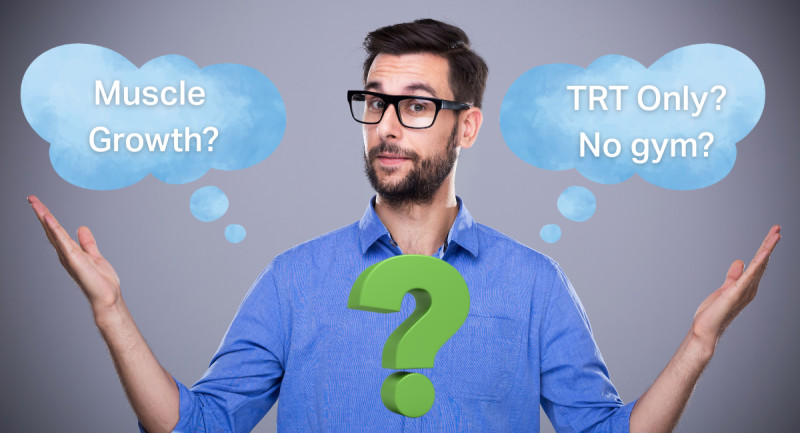

Testosterone replacement therapy (TRT) is often linked with muscle growth, strength gains, and a leaner physique. But what if you’re not working out — or can’t? Can TRT still help you build muscle on its own?
It’s a question many men ask when considering therapy: Is testosterone alone enough to change your body? The short answer? It’s complicated.
In this article, we break down what the science really says about TRT without exercise — including what kind of results (if any) you can expect, and why hitting the gym still matters if muscle growth is your goal.
Topics covered in this article:
What Does TRT Do to Your Body?
Testosterone replacement therapy (TRT) works by increasing testosterone to healthy levels — but its effects go beyond just boosting libido. Here’s how it impacts your body:
- Increases protein synthesis: Higher testosterone helps your body build and repair muscle tissue more efficiently.
- Boosts red blood cell production: This can improve oxygen delivery to muscles, supporting endurance and recovery.
- Shifts fat distribution: TRT can reduce visceral fat and promote a leaner body composition over time.
- Improves bone density: Healthy testosterone levels help strengthen bones, lowering the risk of fractures.
These effects set the stage for better muscle growth — but they don’t guarantee it unless your body is given the right stimulus (like resistance training).
Can TRT Alone Build Muscle?
Not significantly.
Testosterone replacement therapy can support muscle maintenance, but can it build new muscle without exercise?
Here’s what the research shows:
- TRT helps preserve muscle mass. In men with low testosterone, TRT often prevents further muscle loss even without resistance training.
- Muscle gain without workouts is limited. While some studies report slight increases in lean mass, the changes are typically small and mostly due to water retention or improved nitrogen balance, not true muscle hypertrophy. One NIH study showed that while TRT increased lean mass, true muscle hypertrophy was minimal without resistance training.
- Body composition may improve. In sedentary men, TRT has been shown to reduce fat mass and slightly increase lean mass. However, these shifts are modest compared to what is possible with exercise.
Bottom line: TRT can help maintain muscle and slightly improve body composition, but it does not meaningfully build new muscle on its own.
For noticeable muscle growth, resistance training is still essential.
Why Exercise Still Matters (Even on TRT)
Because testosterone needs a signal.
TRT supports the body’s ability to grow muscle, but without resistance training, that potential goes mostly untapped.
Here’s why working out still makes all the difference:
- Training amplifies testosterone’s impact. Exercise increases androgen receptor activity in muscle cells, making tissues more responsive to the testosterone you’re getting through TRT.
- Muscle needs a reason to grow. Hypertrophy only happens when the body is pushed to adapt. Mechanical stress from resistance training is the trigger that testosterone enhances.
- TRT and training work better together. Studies show that men on TRT gain significantly more lean mass and strength when they follow a consistent workout program, compared to TRT alone. For a complete view of all changes you can expect, see the full TRT results timeline.
Bottom line: TRT gives your body the hormonal support to grow muscle, but without training, it won’t act on it.
Exercise turns that potential into real results.
What Happens If You Take TRT But Stay Inactive
You may feel better—but not look or function much different.
Testosterone replacement can improve energy, mood, and libido. But without physical activity, the benefits for your body composition are limited.
Here’s what typically happens:
- You maintain more muscle than before. TRT can help prevent muscle breakdown, especially in men with low T. But maintenance is not the same as growth.
- Fat may shift—but not disappear. Some men experience modest fat loss or redistribution (e.g. less abdominal fat), but inactivity often blunts these effects.
- Risks can increase without physical change. If body composition doesn’t improve, TRT may raise the risk of side effects like elevated hematocrit, estrogen imbalance, or worsening sleep apnea.
In short: Taking TRT without staying active might help you feel more like yourself, but it won’t deliver the full metabolic or physical benefits.
TRT affects more than muscle. Read about TRT and beard growth as another common change.
Bottom Line: What to Expect on TRT Without Exercise
TRT isn’t a shortcut to muscle growth.
It can help maintain lean mass and support how you feel, but without strength training, the physical changes are limited.
Here’s what to keep in mind:
- You might notice small improvements. Some fat loss, better energy, and slightly more lean mass are possible. But don’t expect major muscle gains without resistance training.
- Exercise turns TRT into real progress. Strength training gives testosterone a reason to build muscle. The two work best together.
- Talk to your doctor if you’re unsure. If you’re on TRT and not seeing results—or you’re not sure if it’s right for you—check in with your healthcare provider. They can assess your dose, lifestyle, and goals.
Summary: TRT supports your baseline, but it’s not a magic fix. To truly reshape your body, training still does the heavy lifting.
One-Minute Takeaway
TRT can help you preserve muscle and slightly reduce fat—even without hitting the gym. But for real muscle growth, strength training is non-negotiable. If you’re on TRT and not seeing results, talk to your doctor and consider adding resistance workouts to your routine.
Frequently Asked Questions
Yes, but only slightly.
TRT may increase lean body mass through water retention and improved nitrogen balance, but without resistance training, actual muscle growth is limited.
Unlikely.
Strength gains come from muscular adaptations to physical stress. TRT supports muscle maintenance, but without training, strength improvements are minimal.
Yes, for maintaining muscle.
If you're temporarily inactive, TRT can help preserve muscle and reduce fat gain. It's not a replacement for rehab or training but may reduce the decline.
Yes, especially in men with low testosterone.
TRT has been shown to slow age-related muscle loss and improve body composition. Results are better when combined with exercise and healthy lifestyle habits.
References
UPGUYS has strict sourcing guidelines to ensure our content is accurate and current. We rely on peer-reviewed studies, academic research institutions, and medical associations. We strive to use primary sources and refrain from using tertiary references.- Nuclear protein NP60 regulates p38 MAPK activity, PubMed,
https://pubmed.ncbi.nlm.nih.gov/16352664/ - Testosterone Replacement Therapy (TRT), Cleveland Clinic,
https://my.clevelandclinic.org/health/treatments/testosterone-replacement-therapy-trt - Testosterone Replacement Therapy (TRT): What to Know, Medical News Today,
https://www.medicalnewstoday.com/articles/testosterone-replacement-therapy-trt
This article is written for informational purposes only and does not constitute medical advice. The information provided in the articles cannot and should not replace advice from a healthcare professional. Talk to your healthcare provider about any physical or mental health concerns or the risks and benefits of any treatment or medication.


UPRX Pharmacy (West) Licenced by:
College of Pharmacists of British Columbia
Licence Number: 38287
1221543 B.C. LTD
224 – 3989 Henning Dr.
Burnaby BC, V5C 6P8 Canada
P: 604-291-1094 F: 604-291-0827
Pharmacy Manager: Mehrdad Rezaei
UPRX Pharmacy (East)
Accredited by:
Ontario College of Pharmacists
Accreditation Number: 309322
1000286128 Ontario Inc.
105 - 91 Skyway Ave
Etobicoke, ON M9W 6R5 Canada
P: 416-679-1774 F: 416-679-1808
Designated Manager: Todd Spetter