TRT And Gym Performance After 40: Strength, Recovery, And What Changes
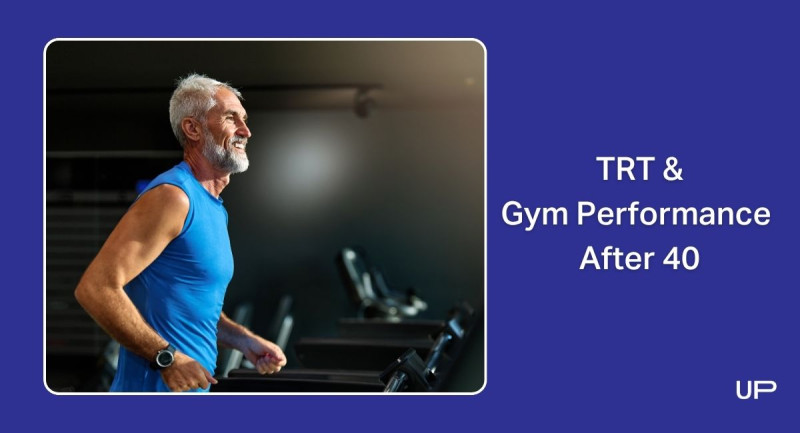

Many men notice that workouts feel different as they age. Strength plateaus, recovery slows, and energy levels become less consistent—even with the same training routine.
For men exploring testosterone replacement therapy (TRT) in Canada, a common question is whether low testosterone is affecting gym performance, and if TRT can help restore strength, recovery, and training consistency.
This article explains how testosterone affects performance after 40, what changes are normal with aging, and where TRT may or may not make a meaningful difference.
Topics covered in this article:
- Does TRT Improve Gym Performance After 40?
- Why Gym Performance Declines After 40
- How TRT Affects Strength and Muscle Growth
- Does TRT Improve Workout Recovery?
- Energy, Motivation, and Training Consistency
- What TRT Does NOT Fix
- How Long Does It Take to See Gym Results on TRT?
- TRT vs Natural Training After 40
- When to Consider TRT for Performance Issues
- FAQ
- Conclusion
- References
Does TRT Improve Gym Performance After 40?
Yes—TRT can improve gym performance after 40 in men with clinically low testosterone, but it does not replace proper training, nutrition, or recovery.
What TRT can improve
- Strength output: Supports muscle contraction and overall force production
- Muscle mass: Increases lean muscle through improved protein synthesis
- Recovery time: May reduce soreness and allow more consistent training
- Energy levels: Improves baseline energy and reduces fatigue
What TRT does not do
- Instant results: Performance improvements take time and consistency
- Fix poor training: Ineffective programming will still limit results
- Fix poor nutrition: Muscle growth and recovery still depend on diet
- Replace sleep: Recovery remains heavily dependent on sleep quality
- Act like steroids: TRT restores normal levels, not supraphysiologic performance
Who is most likely to benefit
- Men with low testosterone: Confirmed through lab testing and symptoms
- Men with fatigue and low drive: Especially when it affects training consistency
- Men with declining strength: Despite consistent workouts and effort
- Men with slower recovery: Experiencing longer soreness and reduced frequency
Key takeaway
TRT can improve strength, recovery, and energy in men over 40 with low testosterone, but results depend on proper diagnosis, consistent training, and realistic expectations.
Why Gym Performance Declines After 40
Gym performance often declines after 40 due to physiological, hormonal, and recovery-related changes, even when training habits remain consistent.
Testosterone levels decline
- Natural testosterone drops with age: Levels typically decrease gradually starting in the 30s
- Lower anabolic signalling: Reduced testosterone leads to weaker muscle-building signals
- Impact on performance: Strength, endurance, and recovery capacity may all decline
Muscle protein synthesis decreases
- Reduced efficiency: The body becomes less responsive to training stimulus
- Harder to build muscle: Gains require more effort and consistency
- Slower adaptation: Progress takes longer compared to earlier years
Recovery becomes slower
- Increased muscle damage duration: Soreness lasts longer after workouts
- Reduced repair speed: Tissue recovery is less efficient
- Training frequency impact: Harder to maintain high-frequency training
Energy and motivation change
- Lower baseline energy: Fatigue becomes more noticeable
- Reduced drive to train: Hormonal changes affect motivation
- Consistency challenges: Training intensity and frequency may drop
Injury risk increases
- Joint and connective tissue wear: Accumulates over time
- Reduced resilience: Body tolerates stress less effectively
- Longer recovery from injury: Downtime increases
Lifestyle factors compound the effect
- Sleep quality declines: Directly impacts recovery and hormones
- Higher stress levels: Affects cortisol and recovery balance
- Less time for training: Work and family responsibilities increase
Key takeaway
Gym performance declines after 40 due to lower testosterone, reduced muscle-building efficiency, slower recovery, and lifestyle factors, all of which make progress more gradual and require more structured training and recovery strategies.
How TRT Affects Strength and Muscle Growth
TRT improves strength and muscle growth by restoring testosterone to physiological levels, which directly supports protein synthesis, lean mass development, and force production in men with low testosterone.
Protein synthesis
- Increases muscle protein synthesis: Testosterone enhances the body’s ability to build new muscle tissue
- Improves training response: Resistance exercise becomes more effective at stimulating growth
- Reduces muscle breakdown: Helps preserve muscle during recovery periods
Result: More efficient muscle repair and growth after workouts.
Lean muscle mass
- Increases lean body mass: Supports gradual gains in muscle over time
- Improves body composition: Helps reduce fat relative to muscle
- Enhances adaptation: Muscles respond more consistently to progressive overload
Result: Noticeable improvements in muscle size and composition with consistent training.
Strength output
- Improves force production: Higher testosterone supports stronger muscle contractions
- Enhances neuromuscular efficiency: Better activation during lifts
- Supports progressive overload: Enables steady increases in training intensity
Result: Gradual and consistent strength gains with proper programming.
Important context
- Results are gradual: Strength and muscle gains develop over weeks to months
- Requires resistance training: TRT alone does not build muscle
- Depends on nutrition: Adequate protein and calories remain essential
Key takeaway
TRT supports strength and muscle growth by improving protein synthesis, increasing lean muscle mass, and enhancing force production, but results depend on consistent training, proper nutrition, and time.
Does TRT Improve Workout Recovery?
Yes—TRT can improve workout recovery in men with low testosterone by supporting muscle repair, reducing prolonged soreness, and allowing more consistent training frequency.
Delayed onset muscle soreness (DOMS)
- May reduce soreness duration: Testosterone supports faster muscle repair after training
- Less severe post-workout fatigue: Recovery feels more manageable between sessions
- Improved tolerance to training volume: Allows better handling of higher workloads
Result: Soreness may still occur, but it typically resolves faster and feels less limiting.
Recovery time
- Faster muscle repair: Testosterone supports tissue rebuilding and adaptation
- Improved protein turnover: Enhances recovery from resistance training
- Reduced downtime between sessions: Muscles recover more efficiently
Result: Shorter recovery windows between workouts when training is structured properly.
Training frequency
- Supports more consistent training: Less need for extended rest periods
- Enables higher weekly volume: More sessions can be completed without excessive fatigue
- Improves long-term progression: Consistency drives better results over time
Result: Ability to train more frequently without accumulating excessive fatigue.
Important context
- Not a complete recovery solution: Sleep, nutrition, and stress still play a major role
- Works best with proper programming: Overtraining can still occur
- Only effective if testosterone is low: Normal levels will not see the same benefit
Key takeaway
TRT can improve recovery by reducing soreness, shortening recovery time, and supporting more consistent training, but it must be combined with proper sleep, nutrition, and training structure to be effective.
Energy, Motivation, and Training Consistency
TRT can improve energy levels, mental drive, and training consistency in men with low testosterone, but effects depend on overall health, sleep, and lifestyle factors.
Fatigue vs drive
- Reduces baseline fatigue: Low testosterone is often associated with persistent tiredness
- Improves physical energy: Makes it easier to initiate and complete workouts
- Restores training drive: Increases willingness to train consistently
Result: Workouts feel less effortful, and maintaining a routine becomes more achievable.
Mental aspect
- Improves motivation: Testosterone influences drive and goal-oriented behaviour
- Enhances focus: Better concentration during training sessions
- Supports mood stability: Reduces mental barriers that impact consistency
Result: Training becomes more consistent due to improved mental engagement and focus.
Training consistency
- More regular workouts: Reduced fatigue leads to fewer missed sessions
- Better adherence to programs: Easier to follow structured routines
- Compounding results over time: Consistency leads to measurable progress
Result: Long-term performance improves primarily through consistency, not short-term spikes.
Important context
- Not a stimulant effect: TRT does not create artificial energy spikes
- Sleep remains critical: Poor sleep can override benefits
- Stress management matters: High stress can reduce motivation even with TRT
Key takeaway
TRT can improve energy, motivation, and training consistency in men with low testosterone, but sustainable results depend on sleep, stress, and adherence to a structured routine.
What TRT Does NOT Fix
TRT does not fix underlying lifestyle and training issues. While it can improve hormone levels, it cannot compensate for poor recovery habits, ineffective training, or inadequate nutrition.
Poor sleep
- Sleep drives recovery: Muscle repair and hormone regulation depend heavily on sleep quality
- Low sleep reduces results: Even with TRT, poor sleep limits strength, recovery, and muscle growth
- Hormonal disruption continues: Sleep deprivation affects cortisol and overall recovery balance
Result: Inadequate sleep will blunt most of the benefits of TRT.
Bad programming
- No structure limits progress: Random or poorly designed workouts reduce effectiveness
- Lack of progression: Without progressive overload, strength and muscle gains stall
- Overtraining risk: Excess volume without proper planning leads to fatigue and setbacks
Result: TRT cannot replace a structured, progressive training program.
Nutrition gaps
- Protein intake matters: Muscle growth requires sufficient protein
- Calorie balance is critical: Undereating or overeating affects performance and composition
- Micronutrient deficiencies: Impact energy, recovery, and overall health
Result: Without proper nutrition, TRT will not deliver meaningful performance improvements.
Important context
- TRT restores, not enhances beyond normal: It brings levels back to physiological range
- Lifestyle remains the foundation: Training, sleep, and nutrition determine outcomes
- Results are conditional: Benefits depend on the full system working together
Key takeaway
TRT does not fix poor sleep, ineffective training, or inadequate nutrition; it supports performance only when these foundational factors are properly addressed.
How Long Does It Take to See Gym Results on TRT?
Most men begin to notice gym-related improvements within 4 to 12 weeks of starting TRT, with full effects on strength and muscle development developing over several months.
Early phase (0–4 weeks)
- Energy may improve first: Reduced fatigue and better baseline energy
- Mental drive increases: Improved motivation to train consistently
- No major physical changes yet: Strength and muscle gains are minimal
Result: Training consistency improves before visible performance changes.
Initial performance changes (4–8 weeks)
- Strength begins to increase: Gradual improvement in lifting capacity
- Recovery improves: Less prolonged soreness after workouts
- Workouts feel easier: Better endurance and session quality
Result: Noticeable improvements in gym performance start to appear.
Muscle and strength development (8–16 weeks)
- Lean muscle increases: Visible changes in muscle size and density
- Strength gains accelerate: More consistent progression in lifts
- Training frequency improves: Ability to train more consistently
Result: Clear physical and performance improvements become evident.
Long-term adaptation (3–6+ months)
- Sustained muscle growth: Continued improvements with proper training
- Stable performance levels: More predictable strength and recovery
- Body composition changes: Increased lean mass and reduced fat (if aligned with nutrition)
Result: Full benefits depend on long-term consistency.
What affects the timeline
- Baseline testosterone levels: Lower starting levels may show more noticeable improvement
- Training quality: Structured programs accelerate results
- Nutrition: Protein intake and calories directly impact muscle growth
- Sleep and recovery: Poor recovery slows progress
Important context
- TRT is not immediate: Results build gradually over time
- Consistency drives outcomes: Training and lifestyle determine results
- Individual variation exists: Timelines differ based on physiology and habits
Key takeaway
Gym results on TRT typically begin within 4 to 8 weeks and become more noticeable by 8 to 16 weeks, but meaningful improvements in strength, muscle, and recovery depend on consistent training, proper nutrition, and time.
TRT vs Natural Training After 40
TRT and natural training after 40 can both improve strength and fitness, but they differ in hormonal support, rate of progress, and recovery capacity.
Hormonal environment
- TRT: Restores testosterone to a normal physiological range in men with deficiency
- Natural training: Relies on declining endogenous testosterone levels
Result: TRT provides a more stable hormonal environment if levels are clinically low.
Rate of progress
- TRT: May accelerate strength and muscle gains in men with low testosterone
- Natural training: Progress is typically slower and requires more precision
Result: TRT can improve the speed of progress, but not beyond normal physiological limits.
Recovery capacity
- TRT: Supports faster recovery between sessions
- Natural training: Recovery becomes slower with age
Result: TRT may allow more consistent training frequency when testosterone is low.
Muscle and strength potential
- TRT: Helps restore lost muscle and strength due to low testosterone
- Natural training: Maintains and builds muscle within age-related limits
Result: Both can build muscle, but TRT primarily restores what low testosterone has reduced.
Limitations and expectations
- TRT is not performance enhancement: It does not create supraphysiologic gains
- Natural training still works: Strength and muscle can improve at any age
- Lifestyle factors dominate outcomes: Training, nutrition, and sleep remain the primary drivers
Result: Outcomes depend more on consistency and lifestyle than on TRT alone.
Important context
- TRT is for deficiency, not optimization: It is prescribed based on medical need
- Not everyone benefits equally: Men with normal testosterone may see little change
- No shortcut to results: Training quality still determines progress
Key takeaway
TRT can improve strength, recovery, and progress in men over 40 with low testosterone, but it does not replace natural training principles, and long-term results still depend on consistency, programming, and lifestyle.
When to Consider TRT for Performance Issues
TRT should be considered for performance issues only when symptoms of low testosterone are present and confirmed with lab testing, not for normal training plateaus.
Symptoms vs performance plateau
- Low testosterone symptoms: Persistent fatigue, low motivation, reduced libido, and declining strength
- Training plateau: Slower progress despite consistent workouts, often due to programming or recovery
Result: A plateau alone is not a reason to consider TRT.
Signs performance issues may be hormonal
- Unexplained strength decline: Not related to training changes or injury
- Chronic fatigue: Ongoing low energy that affects workouts and daily function
- Reduced recovery capacity: Longer soreness without increased training load
- Decreased drive to train: Loss of motivation that was previously stable
Result: These patterns suggest a possible hormonal component.
When TRT may be appropriate
- Confirmed low testosterone levels: Based on blood testing
- Consistent symptoms: Not explained by sleep, stress, or nutrition
- Impact on quality of life: Performance decline affecting overall well-being
Result: TRT is considered when both symptoms and lab results align.
When TRT is NOT appropriate
- Normal testosterone levels: No clinical deficiency
- Poor training structure: Ineffective programming or lack of progression
- Lifestyle limitations: Sleep deprivation, high stress, or poor nutrition
Result: Addressing these factors should come before considering TRT.
Important context
- Medical evaluation is required: TRT should only be prescribed after proper assessment
- Not a performance shortcut: It restores normal levels, not enhances beyond them
- Other causes must be ruled out: Many performance issues are non-hormonal
Key takeaway
TRT should only be considered for performance issues when low testosterone is confirmed and symptoms are present, not for typical training plateaus or lifestyle-related limitations.
FAQ
Yes—TRT can increase strength in men with low testosterone by improving muscle function and recovery. However, gains are gradual and depend on consistent training and proper nutrition.
Yes. TRT may improve recovery by reducing soreness duration and supporting faster muscle repair, but sleep, nutrition, and training structure still play a major role.
No. TRT restores testosterone to normal physiological levels, while anabolic steroids typically raise levels far above the natural range for performance enhancement.
Yes. Muscle can still be built after 40 through resistance training, proper nutrition, and recovery. TRT is only relevant for men with clinically low testosterone.
Common causes include:
- Natural decline in testosterone
- Slower recovery with age
- Poor sleep or high stress
- Ineffective training program
- Inadequate nutrition
Weakness is not always hormonal and should be evaluated in context.
Conclusion
Gym performance after 40 changes due to a combination of hormonal shifts, recovery capacity, and lifestyle factors.
TRT can improve strength, recovery, energy, and training consistency in men with low testosterone, but it is not a shortcut or replacement for proper training and recovery habits.
For many men, performance issues are driven by sleep, stress, programming, or nutrition rather than hormones alone. Identifying the root cause is critical before considering treatment.
When testosterone is clinically low and symptoms are present, TRT can help restore performance to a more sustainable level. However, long-term results still depend on consistency, structured training, and overall health.
References
UPGUYS has strict sourcing guidelines to ensure our content is accurate and current. We rely on peer-reviewed studies, academic research institutions, and medical associations. We strive to use primary sources and refrain from using tertiary references.- Testosterone Therapy in Men With Hypogonadism: An Endocrine Society* Clinical Practice Guideline, JCEM,
https://academic.oup.com/jcem/article/103/5/1715/4939465 - Testosterone dose-response relationships in healthy young men, PubMed,
https://pubmed.ncbi.nlm.nih.gov/11701431/ - Testosterone Replacement, Muscle Strength, and Physical Function, PubMed,
https://pmc.ncbi.nlm.nih.gov/articles/PMC5924952/
This article is written for informational purposes only and does not constitute medical advice. The information provided in the articles cannot and should not replace advice from a healthcare professional. Talk to your healthcare provider about any physical or mental health concerns or the risks and benefits of any treatment or medication.





UPRX Pharmacy (West) Licenced by:
College of Pharmacists of British Columbia
Licence Number: 38287
1221543 B.C. LTD
224 – 3989 Henning Dr.
Burnaby BC, V5C 6P8 Canada
P: 604-291-1094 F: 604-291-0827
Pharmacy Manager: Mehrdad Rezaei
UPRX Pharmacy (East)
Accredited by:
Ontario College of Pharmacists
Accreditation Number: 309322
1000286128 Ontario Inc.
105 - 91 Skyway Ave
Etobicoke, ON M9W 6R5 Canada
P: 416-679-1774 F: 416-679-1808
Designated Manager: Todd Spetter