High Estrogen On TRT: Symptoms Timeline And Early Warning Signs


Testosterone replacement therapy (TRT) in Canada is designed to restore healthy testosterone levels, but it also changes how your body regulates other hormones—especially estrogen. For many men, estrogen-related symptoms can feel confusing because they don’t always appear immediately or in obvious ways.
Some symptoms develop gradually, while others show up early in treatment. Understanding what high estrogen feels like, and how it typically presents, helps you recognize potential issues before they worsen or are misinterpreted.
Topics covered in this article:
- What Are High Estrogen Symptoms on TRT?
- How Fast Can Estrogen Increase on TRT?
- Week-by-Week Estrogen Symptom Timeline
- Early Warning Signs of High Estrogen
- Why Estrogen Rises on TRT
- Symptoms Without High Lab Estrogen
- When High Estrogen Becomes a Problem
- What to Do If You Notice Symptoms
- FAQ
- Conclusion
- References
What Are High Estrogen Symptoms on TRT?
High estrogen symptoms on TRT can include fluid retention, mood changes, breast tenderness, and reduced libido, often developing gradually as hormone levels shift.
These symptoms are usually the result of testosterone being converted into estrogen through a natural process in the body. While some estrogen is necessary for balance, excess levels or sensitivity to changes can lead to noticeable effects.
- Common symptoms include bloating, water retention, and a feeling of “softness” in body composition
- Hormonal symptoms may include breast tenderness or sensitivity
- Some men experience mood changes such as irritability or emotional instability
- Libido and sexual function may feel inconsistent despite adequate testosterone levels
Not all symptoms appear at once, and not all are caused by high estrogen alone. The timing, pattern, and combination of symptoms are often more informative than any single sign.
How Fast Can Estrogen Increase on TRT?
Estrogen levels can begin to rise within the first few weeks of starting TRT, with symptoms sometimes appearing as early as 2–4 weeks depending on dose, body composition, and individual response.
The timeline is not the same for everyone, but most men follow a predictable pattern where hormonal shifts happen early, while noticeable symptoms develop gradually over time.
Timeline overview
- Estrogen can start increasing soon after testosterone levels rise
- This is due to aromatization, where some testosterone is converted into estrogen
- Blood level changes may occur before any symptoms are noticeable
- Symptoms tend to appear progressively rather than all at once
Early vs later changes
- Early phase (first 2–4 weeks):
- Subtle changes may begin, such as mild water retention, slight mood shifts, or feeling “different” without a clear cause
- Mid phase (4–8 weeks):
- Symptoms may become more noticeable, including bloating, emotional sensitivity, or inconsistent libido
- Later phase (8+ weeks):
- If levels remain elevated or unbalanced, symptoms can become more persistent or pronounced
Not all men experience symptoms, and not all symptoms are caused by estrogen alone. The timing, progression, and combination of changes are what help distinguish normal adjustment from a developing imbalance.
Week-by-Week Estrogen Symptom Timeline
High estrogen symptoms on TRT typically follow a gradual, predictable pattern. While the exact timing varies by individual, most men experience changes in phases rather than all at once.
First weeks (Weeks 1–3)
- Hormone levels begin shifting as testosterone rises and aromatization increases
- Estrogen may start increasing, but symptoms are often minimal or subtle
- Some men notice:
- Mild water retention
- Slight mood changes
- A general sense of feeling “different” without clear symptoms
At this stage, changes are often physiological rather than clearly symptomatic.
4–6 weeks
- Hormonal changes become more noticeable as levels stabilize
- Symptoms, if present, tend to become more defined
- Common experiences include:
- Bloating or increased fluid retention
- Emotional sensitivity or irritability
- Fluctuations in libido or energy
This is when many men begin questioning whether estrogen may be contributing to how they feel.
Longer term (6–12+ weeks)
- If estrogen remains elevated or unbalanced, symptoms can persist or intensify
- Patterns become more consistent rather than occasional
- Possible developments include:
- Ongoing water retention
- Breast tenderness
- More stable but undesirable mood or energy changes
At this stage, symptoms are less likely to resolve on their own and may require evaluation and adjustment.
This timeline is not exact, but it provides a useful framework. The key is recognizing patterns over time rather than reacting to isolated symptoms.
Early Warning Signs of High Estrogen
High estrogen on TRT often starts with subtle symptoms that are easy to overlook or misattribute. Recognizing these early signs can help you identify a developing imbalance before it becomes more noticeable or persistent.
Subtle symptoms
- A mild sense of bloating or feeling “softer” despite no major changes in diet or activity
- Slight mood shifts, such as feeling more emotional or less stable than usual
- Changes in how your energy feels—not necessarily lower, but less consistent
- Libido that feels unpredictable rather than clearly improved or stable
These early symptoms are often gradual and may not immediately stand out as hormonal.
Often misinterpreted
- Symptoms are frequently blamed on stress, sleep, or lifestyle factors
- Mood changes may be seen as temporary or unrelated to TRT
- Fluid retention can be mistaken for weight gain or dietary issues
- Libido fluctuations may be confusing, especially if testosterone levels are otherwise improving
The key challenge with early estrogen-related symptoms is that they are not obvious or specific. They tend to appear as small changes in how you feel, rather than clear clinical signs.
Paying attention to patterns—especially when multiple subtle symptoms appear together—is often more useful than focusing on any single change.
Why Estrogen Rises on TRT
Estrogen increases on TRT as a natural result of how the body processes testosterone. This is expected, but the degree of increase depends on several key factors that influence hormone balance.
Aromatization
- Testosterone is converted into estrogen through a natural process called aromatization
- This process occurs in various tissues, including fat tissue
- As testosterone levels rise on TRT, more substrate is available for conversion
Aromatization is essential for hormone balance, but excessive conversion can lead to symptoms.
Dose
- Higher testosterone doses increase the likelihood of more estrogen conversion
- Rapid increases in testosterone levels can amplify this effect
- Overdosing or aggressive protocols are more likely to lead to imbalance
The goal is to maintain physiological levels rather than pushing levels unnecessarily high.
Body fat
- Fat tissue contains higher levels of the enzyme responsible for aromatization
- Men with higher body fat percentages tend to convert more testosterone into estrogen
- This can make estrogen-related symptoms more likely or more pronounced
Body composition plays a significant role in how hormones are processed.
Injection frequency
- Infrequent injections can create higher peaks in testosterone levels
- Higher peaks can lead to increased aromatization during those periods
- More frequent or split dosing can help reduce large fluctuations
How testosterone is administered can influence how stable hormone levels remain.
Estrogen rise on TRT is not random—it is driven by predictable physiological factors. Understanding these drivers helps explain why some men develop symptoms while others remain stable on the same treatment.
Symptoms Without High Lab Estrogen
Not all symptoms that feel like “high estrogen” are actually caused by elevated estrogen levels on lab tests. This is one of the most common sources of confusion on TRT.
Perceived vs actual estrogen imbalance
- Some men experience symptoms typically associated with high estrogen, even when lab values are within normal range
- This can include bloating, mood changes, or libido fluctuations
- In many cases, the issue is not absolute estrogen levels, but how hormones are fluctuating over time
Rapid changes in hormone levels—especially early in TRT or after dose adjustments—can create symptoms that mimic imbalance without showing up clearly on labs.
Sensitivity vs hormone levels
- Individuals vary in how sensitive they are to hormonal changes
- Some men may feel symptoms at levels that are technically within a normal range
- Others may tolerate higher levels without noticeable effects
This means symptoms are not always directly proportional to lab numbers.
It is also important to consider that similar symptoms can be caused by other factors, such as:
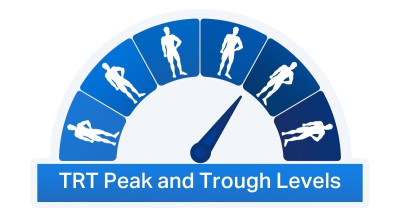
- Testosterone fluctuations (peak–trough swings)
- Sleep, stress, or lifestyle changes
- Adjustment phase during early TRT
Symptoms should always be evaluated in context. Lab values provide important data, but how you feel—and how consistently you feel it—is equally important in understanding what is actually happening.
When High Estrogen Becomes a Problem
Not all increases in estrogen on TRT are problematic. Estrogen plays an important role in men’s health, and mild elevations are often expected. The key is distinguishing between normal adaptation and clinically relevant imbalance.
Mild vs clinically relevant
- Mild increases in estrogen are common and often do not require intervention
- These may cause minor or temporary symptoms, such as slight water retention or mood changes
- In many cases, the body adapts over time as hormone levels stabilize
Clinically relevant estrogen imbalance is more likely when:
- Symptoms are persistent rather than occasional
- Multiple symptoms appear together and affect quality of life
- Changes do not improve over time or worsen progressively
The pattern and consistency of symptoms are often more important than any single lab value.
When to act
- Symptoms are interfering with daily function, mood, or overall well-being
- There is a clear pattern of worsening symptoms over several weeks
- Lab results show significant imbalance alongside symptoms
- You feel unstable despite following a consistent TRT protocol
Mild or early symptoms do not always require immediate changes. However, persistent or worsening patterns should be evaluated to determine whether adjustments to dose, frequency, or overall management are needed.
The goal is not to eliminate estrogen, but to maintain a balance where both testosterone and estrogen support stable, predictable results.
What to Do If You Notice Symptoms
If you notice symptoms that may be related to high estrogen on TRT, the goal is not to react quickly, but to respond correctly. Most issues can be managed effectively with the right approach.
Monitoring first
- Track when symptoms started and whether they are consistent or occasional
- Look for patterns over time rather than reacting to a single day or week
- Blood work can help confirm whether estrogen levels are actually elevated
Symptoms without context can be misleading. Monitoring provides clarity before making any changes.
Adjustment approach
- Most cases are managed by adjusting testosterone dose or injection frequency
- Reducing large hormonal fluctuations often improves symptoms
- Small, controlled changes are more effective than aggressive adjustments
Treatment should focus on restoring balance, not eliminating estrogen.
Do not self-treat
- Avoid making changes on your own, especially based on symptoms alone
- Self-adjusting dose or adding unprescribed medications can create further imbalance
- Incorrect changes may worsen symptoms or introduce new ones
The safest approach is to review symptoms and lab results with a qualified provider and make structured, evidence-based adjustments.
Most estrogen-related symptoms on TRT are manageable when addressed early and correctly. The key is patience, consistency, and proper guidance rather than quick fixes.
FAQ
Symptoms can begin as early as 2–4 weeks after starting TRT, but they often develop gradually and become more noticeable over time.
They can occur, especially during the early adjustment phase or with higher doses, but not all men experience them.
Yes. Symptoms can occur due to hormone fluctuations or individual sensitivity, even when estrogen levels are within a normal range.
Early signs may include mild bloating, mood changes, and inconsistent libido, which are often subtle and easy to overlook.
Not necessarily. Mild symptoms are common and may resolve as your body adjusts. Persistent or worsening symptoms should be evaluated before making changes.
Management typically involves adjusting testosterone dose or injection frequency, along with regular monitoring—not eliminating estrogen entirely.
Conclusion
High estrogen on TRT does not happen instantly—it develops over time as your body adapts to changing hormone levels.
In many cases, the earliest symptoms are subtle and easy to misinterpret, which is why understanding the timeline is so important. Recognizing patterns, rather than reacting to isolated symptoms, allows for more accurate assessment and better decision-making.
Not all estrogen increases are problematic, and not all symptoms are caused by elevated estrogen. The key is identifying when changes are part of normal adjustment versus when they become persistent or disruptive.
With proper monitoring, consistent dosing, and medical guidance, most estrogen-related symptoms can be managed effectively. The goal is not to eliminate estrogen, but to maintain a stable balance that supports how you feel over time.
References
UPGUYS has strict sourcing guidelines to ensure our content is accurate and current. We rely on peer-reviewed studies, academic research institutions, and medical associations. We strive to use primary sources and refrain from using tertiary references.- Testosterone Therapy in Men With Hypogonadism: An Endocrine Society* Clinical Practice Guideline, JCEM,
https://academic.oup.com/jcem/article/103/5/1715/4939465 - Treatment of estrogen levels in the management of hypogonadism: An anonymous survey of ISSM members, PubMed,
https://pmc.ncbi.nlm.nih.gov/articles/PMC7237335/ - The Utilization and Impact of Aromatase Inhibitor Therapy in Men With Elevated Estradiol Levels on Testosterone Therapy, Science Direct,
https://www.sciencedirect.com/science/article/pii/S2050116121000581
This article is written for informational purposes only and does not constitute medical advice. The information provided in the articles cannot and should not replace advice from a healthcare professional. Talk to your healthcare provider about any physical or mental health concerns or the risks and benefits of any treatment or medication.




UPRX Pharmacy (West) Licenced by:
College of Pharmacists of British Columbia
Licence Number: 38287
1221543 B.C. LTD
224 – 3989 Henning Dr.
Burnaby BC, V5C 6P8 Canada
P: 604-291-1094 F: 604-291-0827
Pharmacy Manager: Mehrdad Rezaei
UPRX Pharmacy (East)
Accredited by:
Ontario College of Pharmacists
Accreditation Number: 309322
1000286128 Ontario Inc.
105 - 91 Skyway Ave
Etobicoke, ON M9W 6R5 Canada
P: 416-679-1774 F: 416-679-1808
Designated Manager: Todd Spetter