TRT And PSA Levels: What Changes Should You Expect?
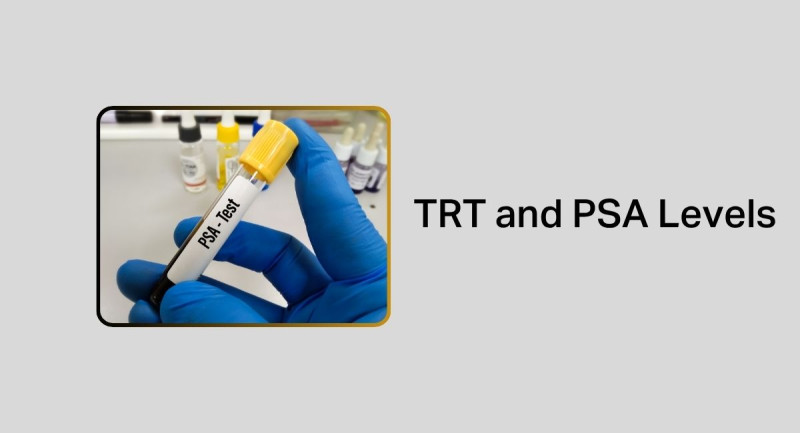

TRT can affect PSA levels, and some men may experience a modest increase after starting treatment. However, a PSA result should never be interpreted on its own.
For men receiving testosterone replacement therapy (TRT) in Canada, PSA monitoring may be part of routine prostate health assessment, depending on age, medical history and individual risk factors. Tracking the baseline level and how it changes over time is often more useful than focusing on a single result.
An elevated PSA does not automatically mean prostate cancer. PSA can also rise because of an enlarged prostate, inflammation, infection or other temporary factors. When a level changes significantly, the next step is usually further assessment rather than assuming the cause or stopping TRT without medical guidance.
Topics covered in this article:
- What Is a PSA Test?
- Does TRT Raise PSA Levels?
- How Much Can PSA Increase After Starting TRT?
- When Does a PSA Increase Require Attention?
- Does a High PSA Mean Prostate Cancer?
- Should PSA Be Checked Before Starting TRT?
- How Often Should PSA Be Checked on TRT?
- What Can Cause PSA to Rise Besides TRT?
- Can an Enlarged Prostate Affect PSA on TRT?
- What Happens if PSA Rises While You Are on TRT?
- Do You Have to Stop TRT if PSA Rises?
- Can You Take TRT After Prostate Cancer?
- How Can You Prepare for a PSA Test?
- When Should You Speak to a Healthcare Provider?
- Key Takeaways
- FAQ
- References
What Is a PSA Test?
A PSA test is a blood test that measures the level of prostate-specific antigen in the bloodstream. PSA is a protein produced by cells in the prostate gland.
Small amounts of PSA are normally present in the blood. Levels may increase when the prostate becomes enlarged, inflamed, irritated or affected by another condition.
Because PSA is produced by prostate tissue, it is considered a prostate marker. However, it is not a cancer diagnosis. A higher PSA level can occur for several non-cancerous reasons, and some men with prostate cancer may not have a dramatically elevated result.
Healthcare providers interpret PSA alongside factors such as age, symptoms, previous results, prostate health and the rate of change over time. Further assessment may be needed when a result is unexpectedly high or continues to rise.
Does TRT Raise PSA Levels?
TRT may cause PSA levels to rise modestly in some men, particularly after treatment begins. However, many men experience little or no clinically meaningful change.
Prostate tissue responds to androgens such as testosterone. When testosterone levels increase from a low baseline, prostate activity may also increase, which can lead to a small rise in PSA.
This change may be more noticeable during the first several months of treatment as the body adjusts. After that, PSA may stabilize, although ongoing monitoring can help identify whether the level continues to rise.
The response varies between individuals. Age, baseline PSA, prostate size, urinary symptoms and overall prostate health can all influence the result. For that reason, healthcare providers focus on the pattern of change over time, not simply whether PSA increased at all.
How Much Can PSA Increase After Starting TRT?
There is no single PSA increase that should be expected in every man after starting TRT. Some men have little or no change, while others may experience a modest rise.
The meaning of that increase depends partly on the baseline PSA level. For example, the same numerical change may be interpreted differently in someone with a low, stable baseline than in someone whose PSA was already elevated or rising before treatment.
Healthcare providers also consider:
- how quickly the PSA increased
- the total size of the change
- whether the result remains elevated on repeat testing
- age and prostate cancer risk
- urinary or prostate-related symptoms
- previous PSA trends
A small increase is not automatically dangerous, but it should not be assumed to be harmless either. PSA changes during TRT should be interpreted in context, especially when the rise is rapid, persistent or significantly higher than the person’s previous results.
When Does a PSA Increase Require Attention?
A PSA increase may require further assessment when it is substantial, persists on repeat testing or is unexpected based on the person’s previous results and risk profile.
According to Endocrine Society guidance, a confirmed PSA increase of more than approximately 1.4 ng/mL above baseline during the first 12 months of TRT is an important reason for clinical review. A confirmed PSA level above approximately 4.0 ng/mL may also prompt further evaluation, although lower thresholds may be used for men at higher risk of prostate cancer.
These numbers should not be treated as universal cutoffs for every man. Age, baseline PSA, family history, prostate symptoms, previous test results and local prostate-screening guidance can all affect how a result is interpreted.
An unexpectedly high PSA is often repeated before conclusions are made because temporary factors may influence the reading. A healthcare provider may also review urinary symptoms, recent infection, ejaculation, prostate procedures and other possible causes.
Men should not try to diagnose the cause themselves or stop TRT based on one result. The appropriate next step is to confirm the finding and have it assessed in the context of the person’s overall prostate health.
Does a High PSA Mean Prostate Cancer?
No. A high PSA does not automatically mean prostate cancer. PSA can rise for several non-cancerous reasons, which is why the result must be interpreted alongside symptoms, previous tests and overall prostate health.
Possible causes of an elevated PSA include:
- Enlarged prostate: Benign prostate enlargement becomes more common with age and can increase PSA levels.
- Prostate inflammation or infection: Prostatitis and urinary infections may temporarily raise PSA.
- Recent ejaculation: Ejaculation shortly before testing may cause a temporary increase in some men.
- Urinary procedures or prostate manipulation: Catheterization, cystoscopy, prostate biopsy or other procedures involving the urinary tract or prostate may affect the result.
- Individual variation: PSA levels and normal patterns differ between men and may change gradually with age.
Although a high PSA is not a cancer diagnosis, it should not be ignored. A healthcare provider may repeat the test, review possible temporary causes, assess urinary symptoms or recommend further evaluation when the level is persistently elevated or rising significantly.
Should PSA Be Checked Before Starting TRT?
PSA may be checked before starting TRT when clinically appropriate, particularly in men whose age, symptoms or personal risk factors make prostate assessment relevant.
A baseline result gives healthcare providers a reference point for interpreting future changes. It can help show whether PSA was already elevated or rising before treatment began.
Before starting TRT, a provider may also review:
- urinary symptoms, such as weak flow or frequent nighttime urination
- personal or family history of prostate cancer
- previous PSA results
- age and overall prostate-screening risk
- recent prostate or urinary concerns
PSA testing should be based on shared decision-making because prostate-screening recommendations are not identical for every man. Age, health status, life expectancy and individual preferences may all affect whether testing is appropriate.
If the baseline PSA is unexpectedly elevated, the test may be repeated and possible causes investigated before TRT begins. Further prostate assessment or specialist referral may also be recommended.
TRT should not be started without appropriate evaluation when there are unresolved prostate concerns. This does not mean that every elevated PSA prevents treatment, but the cause should be assessed before moving forward.
How Often Should PSA Be Checked on TRT?
PSA may be checked before TRT begins, again after treatment starts and periodically during ongoing therapy, depending on age, prostate risk and local screening guidance.
A baseline PSA provides a reference point for future results when testing is clinically appropriate. Follow-up testing may then be recommended after TRT begins to see whether PSA has changed meaningfully from that baseline.
Additional monitoring may be considered after a significant dose or treatment change, especially when there are new urinary symptoms, a previous PSA concern or other prostate risk factors.
Once treatment is stable, PSA monitoring generally follows an individualized schedule based on factors such as:
- age
- previous PSA results
- family or personal history
- urinary symptoms
- overall prostate health
- local prostate-screening recommendations
There is no single testing schedule that is appropriate for every man. A healthcare provider can determine how often PSA should be checked based on the person’s risk profile and how results change over time.
What Can Cause PSA to Rise Besides TRT?
PSA can rise for several reasons unrelated to TRT, including benign prostate enlargement, inflammation, infection and recent pressure or manipulation involving the prostate.
Common causes include:
- Benign prostate enlargement: As the prostate grows with age, it may produce more PSA.
- Prostatitis or urinary infection: Inflammation or infection can temporarily increase PSA levels.
- Recent ejaculation: Ejaculation before testing may cause a short-term rise in some men.
- Cycling or pressure on the prostate: Activities that place prolonged pressure on the area may affect the result in some cases.
- Urinary retention: Difficulty fully emptying the bladder can sometimes be associated with a higher PSA.
- Recent urinary or prostate procedures: Catheterization, cystoscopy, biopsy or other procedures may temporarily raise PSA.
- Normal age-related changes: PSA often increases gradually as the prostate changes with age.
Because these factors can affect the result, healthcare providers may ask about recent symptoms, activities or procedures before interpreting an elevated PSA. Repeat testing may sometimes be appropriate to confirm whether the increase is temporary or persistent.
Can an Enlarged Prostate Affect PSA on TRT?
Yes. An enlarged prostate can raise PSA levels whether or not a man is receiving TRT. This common, non-cancerous condition is known as benign prostatic hyperplasia, or BPH.
As the prostate grows, there is more prostate tissue capable of producing PSA. Men with a larger prostate may therefore have a higher baseline PSA than men with a smaller prostate.
BPH may also cause urinary symptoms such as:
- a weak or interrupted urine stream
- difficulty starting urination
- urgency or frequent urination
- feeling that the bladder has not fully emptied
- waking several times at night to urinate
New or worsening urinary symptoms during TRT should be discussed with a healthcare provider. The symptoms may be related to BPH, infection, urinary retention or another prostate or bladder issue that requires assessment.
An enlarged prostate is not the same as prostate cancer. However, BPH and prostate cancer can sometimes cause similar symptoms or occur at the same time, so changes in PSA or urinary function should not be self-diagnosed.
What Happens if PSA Rises While You Are on TRT?
If PSA rises during TRT, the first step is usually to confirm the result and compare it with previous PSA levels. One elevated reading does not automatically mean TRT caused the increase or that treatment must stop.
A healthcare provider may review:
- the baseline PSA before TRT
- how quickly the level changed
- whether the increase persists on repeat testing
- recent ejaculation, infection or urinary procedures
- new urinary symptoms
- prostate or pelvic discomfort
- personal and family prostate cancer risk
Temporary factors can affect PSA, so repeat testing may be recommended before making treatment decisions. The provider may also assess for benign prostate enlargement, prostatitis, urinary retention or other possible causes.
If the increase is significant, persistent or concerning based on the person’s risk profile, referral for further prostate evaluation may be appropriate.
A rising PSA should not automatically be blamed on TRT. It should be investigated in the same careful way as any unexpected PSA change, using the full clinical picture rather than a single result.
Do You Have to Stop TRT if PSA Rises?
Not necessarily. A rise in PSA does not automatically mean TRT must be stopped. The decision depends on how much the level increased, how quickly it changed and whether the elevation is confirmed on repeat testing.
A healthcare provider may consider:
- the PSA level before TRT
- the size and speed of the increase
- whether the result remains elevated
- urinary or prostate symptoms
- age and prostate cancer risk
- findings from any additional assessment
In some cases, TRT may be temporarily paused while the PSA change is being evaluated. However, stopping treatment does not remove the need to investigate the cause of a rising PSA.
Men should not reduce, skip or stop TRT on their own. Any treatment change should be made with a healthcare provider who can interpret the result in context and determine whether monitoring, further testing or specialist assessment is appropriate.
Can You Take TRT After Prostate Cancer?
Some men may be considered for TRT after prostate cancer, but the decision is complex and must be individualized.
Factors such as the type and stage of cancer, treatment received, time since treatment, current PSA pattern and whether there is any evidence of active disease all matter.
Because the evidence and recommendations can vary by clinical situation, this decision usually requires assessment by the healthcare provider managing TRT and, when appropriate, a urologist or cancer specialist.
Men should not restart or begin TRT after prostate cancer without medical guidance. For a fuller discussion of cancer risk and treatment considerations, see our article on TRT and prostate cancer risk.
How Can You Prepare for a PSA Test?
Follow the instructions provided by your healthcare provider or laboratory, since preparation recommendations may vary.
Before testing, tell your provider about anything that could temporarily affect PSA, including:
- recent ejaculation
- urinary or prostate infection
- difficulty urinating or urinary retention
- recent catheterization, cystoscopy, biopsy or other urinary procedures
- new or worsening urinary symptoms
When PSA is being monitored over time, using reasonably comparable testing conditions can make trends easier to interpret. This may include using the same laboratory when practical and avoiding testing during an active urinary infection or soon after a prostate-related procedure unless your provider recommends otherwise.
Do not delay an important test or follow general online preparation rules without checking first. Your healthcare provider can advise whether any recent activity, symptom or procedure should affect the timing of the test.
When Should You Speak to a Healthcare Provider?
Speak to a healthcare provider if your PSA rises significantly from baseline, remains elevated on repeat testing or is accompanied by new prostate or urinary symptoms.
You should seek assessment for:
- a substantial or rapid PSA increase
- repeatedly elevated PSA results
- new difficulty starting or maintaining urination
- a weak urine stream or trouble emptying the bladder
- blood in the urine or semen
- pelvic, prostate or lower abdominal pain
- new or worsening urgency, frequency or nighttime urination
These symptoms do not automatically mean prostate cancer, but they should be evaluated to identify the cause and determine whether further testing is needed.
Do not interpret a PSA result or change your TRT plan independently. PSA should be assessed alongside previous results, symptoms, age, medical history and individual prostate risk.
Key Takeaways
- TRT may cause a modest PSA increase in some men, but many experience little or no meaningful change.
- PSA is a prostate marker, not a cancer diagnosis.
- Baseline values and trends over time are usually more useful than one isolated result.
- Significant, rapid or persistent PSA changes should be assessed by a healthcare provider.
- An elevated PSA does not automatically mean TRT must be stopped permanently.
FAQ
No. Some men experience a modest increase after starting TRT, while others have little or no meaningful change.
A change may appear within the first several months of treatment, but the timing varies. Follow-up testing helps show whether the level is stable or continuing to rise.
There is no single increase that is normal for everyone. The size and speed of the change, baseline PSA and individual risk factors all matter.
A confirmed increase of more than approximately 1.4 ng/mL above baseline during the first year, or a confirmed PSA above approximately 4.0 ng/mL, may require further assessment. Individual thresholds may differ based on age and risk.
No. PSA can also rise because of benign prostate enlargement, inflammation, infection, urinary retention or recent prostate-related activity or procedures.
Yes. A larger prostate contains more tissue that can produce PSA, so benign prostate enlargement may increase the level.
It may be appropriate, especially when age, symptoms or prostate cancer risk make screening relevant. A baseline result can help interpret future changes.
Testing frequency is individualized. It may include a baseline test, follow-up after starting treatment and ongoing monitoring based on age, previous results and prostate risk.
Yes. Recent ejaculation may temporarily raise PSA in some men. Tell your provider if it occurred shortly before testing.
Not automatically. The result should first be confirmed and assessed. Temporary interruption may sometimes be considered, but treatment should not be changed without medical guidance.
Yes. PSA may decrease if a temporary cause, such as infection or inflammation, resolves. Whether it falls depends on why it increased.
Some men may be considered for TRT after prostate cancer, but the decision depends on treatment history, current cancer status and PSA trends. Specialist assessment is usually required.
References
UPGUYS has strict sourcing guidelines to ensure our content is accurate and current. We rely on peer-reviewed studies, academic research institutions, and medical associations. We strive to use primary sources and refrain from using tertiary references.- PSA test, Mayo Clinic,
https://www.mayoclinic.org/tests-procedures/psa-test/about/pac-20384731 - Rising PSA during Testosterone Replacement Therapy, PubMed,
https://pmc.ncbi.nlm.nih.gov/articles/PMC1472885/ - Elevated PSA (Prostate-Specific Antigen) Level, Cleveland Clinic,
https://my.clevelandclinic.org/health/symptoms/15282-elevated-psa-prostate-specific-antigen-level
This article is written for informational purposes only and does not constitute medical advice. The information provided in the articles cannot and should not replace advice from a healthcare professional. Talk to your healthcare provider about any physical or mental health concerns or the risks and benefits of any treatment or medication.




UPRX Pharmacy (West) Licenced by:
College of Pharmacists of British Columbia
Licence Number: 38287
1221543 B.C. LTD
224 – 3989 Henning Dr.
Burnaby BC, V5C 6P8 Canada
P: 604-291-1094 F: 604-291-0827
Pharmacy Manager: Mehrdad Rezaei
UPRX Pharmacy (East)
Accredited by:
Ontario College of Pharmacists
Accreditation Number: 309322
1000286128 Ontario Inc.
105 - 91 Skyway Ave
Etobicoke, ON M9W 6R5 Canada
P: 416-679-1774 F: 416-679-1808
Designated Manager: Todd Spetter